Industry

Cooling Towers & HVAC Systems

HydroFLOW protects your cooling towers from limescale and biofilm, raises cycles of concentration and dramatically cuts blow-down volumes — fewer chemicals, no system shutdown.

Protection from limescale & biofilm Higher cycles of concentration Fewer chemicals
The real economic burden

What’s driving up the cost of running your cooling tower?

Cooling towers are the heaviest water consumers in commercial buildings and industrial plants. Managing them the traditional way creates an economic burden from four directions.

01

Expensive industrial water tariffs

Water and sewage tariffs for businesses, offices and industry stand at roughly NIS 11.9–13.2 per cubic metre before VAT, depending on consumption volume. A medium-sized cooling tower consumes tens of thousands of cubic metres a year of make-up water.

✓ With HydroFLOWHigher cycles of concentration and reduced blow-down — less water purchased, less water discharged.
02

Chemical treatment

Ongoing use of biocides, scale inhibitors and acids involves costs for materials, storage, dosing and control — alongside safety and environmental considerations.

✓ With HydroFLOWDependency on intensive chemical treatment can be reduced, cutting material use, maintenance work and the system’s environmental impact.
03

Biofilm and microbial growth

The heat and recirculation conditions in cooling systems can encourage biofilm formation and microbial growth, harming system efficiency and raising sanitary risks, including Legionella.

✓ With HydroFLOWHelps reduce biofilm formation and lower microbial and algae load — as part of an overall water quality and hygiene management plan.
04

Charges for out-of-spec discharge (industrial effluent rules)

With traditional chemical treatment, the blow-down water contains residues of biocides, acids and inhibitors. Exceeding the water corporation’s threshold values in its tests can significantly raise the wastewater tariff.
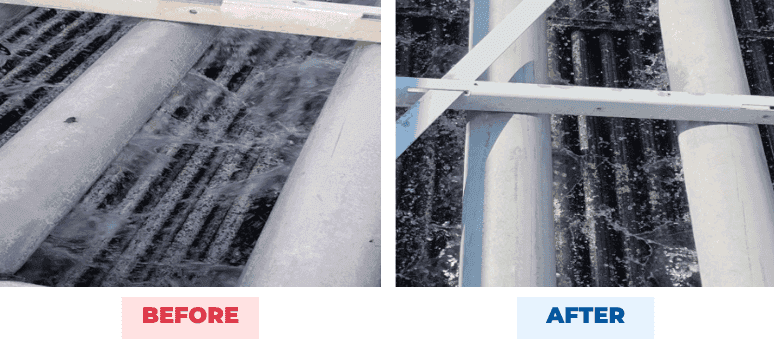
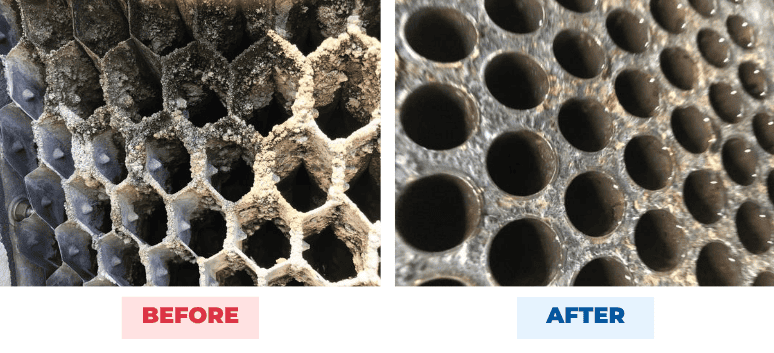
✓ With HydroFLOWFewer chemicals in the blow-down water — less risk of exceeding limits and incurring additional charges.
Lower costs
HydroFLOW systems reduce energy and water costs in cooling towers
Want proof first? See our installation results and case studies →
The solution

How does HydroFLOW protect the cooling tower?

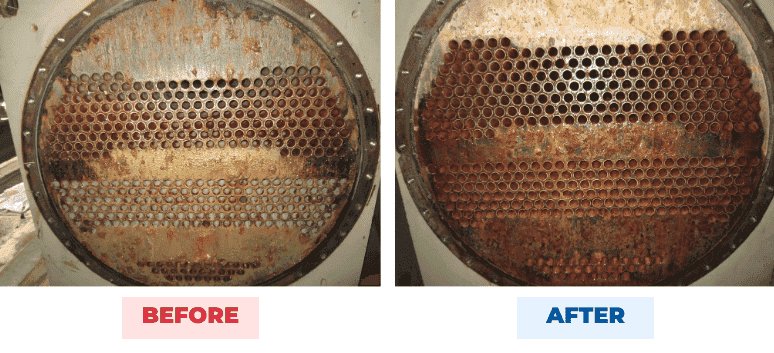
The system is installed externally on the water pipework, with no cutting and no shutdown. A unique electrical signal at ~150 kHz reduces limescale adhesion to pipe walls and heat-exchanger surfaces, and disrupts bacterial biofilm from establishing — allowing you to raise cycles of concentration and cut blow-down.

Up to 85%
Less blow-down water

Based on a documented case study: an 85% reduction in blow-down at a Fortune 100 company headquarters, Houston, USA.

Read the case study ←
Case study
16%
Chiller efficiency gain

Based on a documented case study: a 16% efficiency gain in a chiller system at a bank building, Hong Kong.

Read the case study ←
Case study
Up to 75%
Fewer biocides

Based on a documented case study: a 75% reduction in biocide use and about 65% in blow-down, hospital in California, USA.

Read the case study ←
Case study
Over 99%
Drop in bacteria count

Based on a documented case study: the bacteria count in the tower water fell from about 100,000 to under 1,000 CFU within days, at an office complex in the USA.

Read the case study ←
Case study
Tool

Water Savings Potential Calculator

Enter your cooling tower’s data to get an initial estimate of water savings potential (and optionally chemical savings) with HydroFLOW.

Cycles of concentration

What are “cycles of concentration” — and why do they save so much water?

The more successfully limescale is controlled, the more cycles the water can complete in the cooling tower before it needs to be drained (blow-down) — meaning less fresh water is needed and less water is discharged to sewage.

For example: at a factory in Texas, after installing HydroFLOW, the tower water conductivity was raised from 1,300 to 4,500 µS/cm (3.5×) with reduced scale formation. In other words, the water stays in the system for more cycles, and the amount of blow-down falls accordingly.

1,300→4,500
Tower water conductivity (µS/cm), factory in Texas
Read the case study ←

Biofilm: the bigger thermal damage

Limescale and biofilm are usually mentioned together, but their impact on heat efficiency differs by a significant order of magnitude.

2.6
Limescale (calcium carbonate)

The thermal conductivity of limescale is about 2.6 W/m·K, and every layer of it insulates the heat exchanger.

0.6
Biofilm

The thermal conductivity of biofilm is about 0.6 W/m·K — about 4 times lower than that of limescale. So a thin layer of biofilm insulates the heat exchanger more than limescale of the same thickness.

Source: Buckman Laboratories

Not all chemicals are reduced to the same extent

Rather than a single figure, a more precise picture distinguishes between the two common types of chemical treatment in cooling towers.

Scale inhibitors

About 50%–80% reduction, and sometimes full discontinuation

When limescale is effectively controlled with HydroFLOW, the use of chemical scale inhibitors can usually be cut significantly — and in some cases discontinued altogether.

Biocides

About 50–75% reduction, not full elimination

Most cooling towers still benefit from some level of biocide dosing alongside the physical treatment — not a full replacement, but a significant reduction in the amount required.

Cooling towers: among the highest-risk equipment for Legionella

Cooling towers are considered one of the leading types of equipment at risk of Legionella outbreaks — warm water, slow flow in certain areas, and limescale and biofilm that create a habitat protected from disinfectants. Reducing limescale and biofilm with HydroFLOW helps lower that risk, as part of an overall Legionella management programme — not as a replacement for required sanitation protocols.

Documented results from cooling towers worldwide

12,000 → 500
Bacteria count (CFU/ml) in the tower — food production plant, Italy
Read the case study →
75.5%
Less scale and corrosion inhibitor — 700MW power plant, USA
Read the case study →
68%
Less blow-down — chiller facility, Arizona
Read the case study →
9 months
No chemical treatment, pipework free of scale — factory, Phoenix
Read the case study →
Installation process

Three steps to an advanced solution.

01

Installation

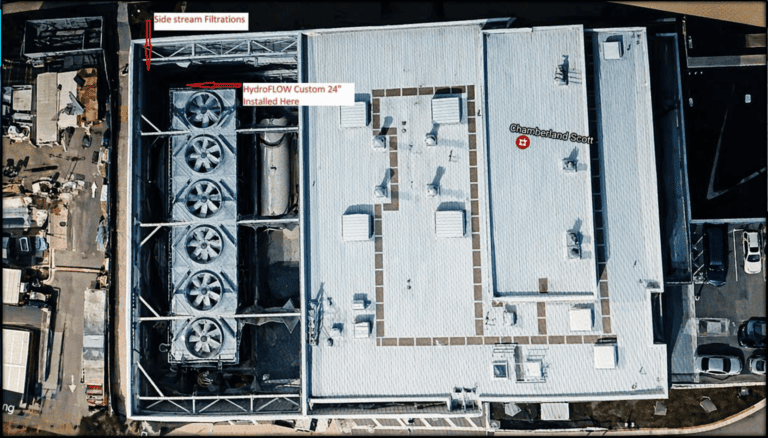
The HydroFLOW system is installed externally onto the cooling-water pipework, with no cutting or cooling-tower shutdown.

02

Treatment

A unique electrical signal is induced into the water continuously and spreads along the pipework in both directions from the unit, treating limescale and biofilm.

03

Result

Existing limescale gradually breaks down, new limescale build-up is significantly reduced, cycles of concentration rise and blow-down is cut significantly.

Applications

Who is it for?

Data Centers

Efficient management of cooling water, maintaining heat transfer and supporting the operational continuity of critical infrastructure.

Case study: a data centre in Amsterdam — 12 HydroFLOW units on 6 cooling towers: control of limescale and spray-nozzle clogging, with no chemical dosing.

Read the case study ←

Cooling towers in office buildings and malls

Maintaining cooling efficiency with no disruption to the building’s day-to-day operations.

Case study: a mall group in Hong Kong — after a successful pilot in one mall, over 100 units were installed across 50+ malls, and condenser cleaning moved from annual cleaning to cleaning as needed.

Read the case study ←

Cooling towers at industrial plants

Protecting heavily loaded cooling systems, alongside significant savings in water and sewage costs.

Case study: a factory in Texas — tower water conductivity was raised from 1,300 to 4,500 µS/cm, and chemical use fell by 75%.

Read the case study ←

Hotels and institutional facilities

Contributing to reducing Legionella risk alongside operational savings, with no need to shut down cooling systems.

Case study: a resort in Las Vegas — estimated savings of about 30,000 m³ of water a year, and treatment with sulphuric acid was discontinued.

Read the case study ←
Management and control
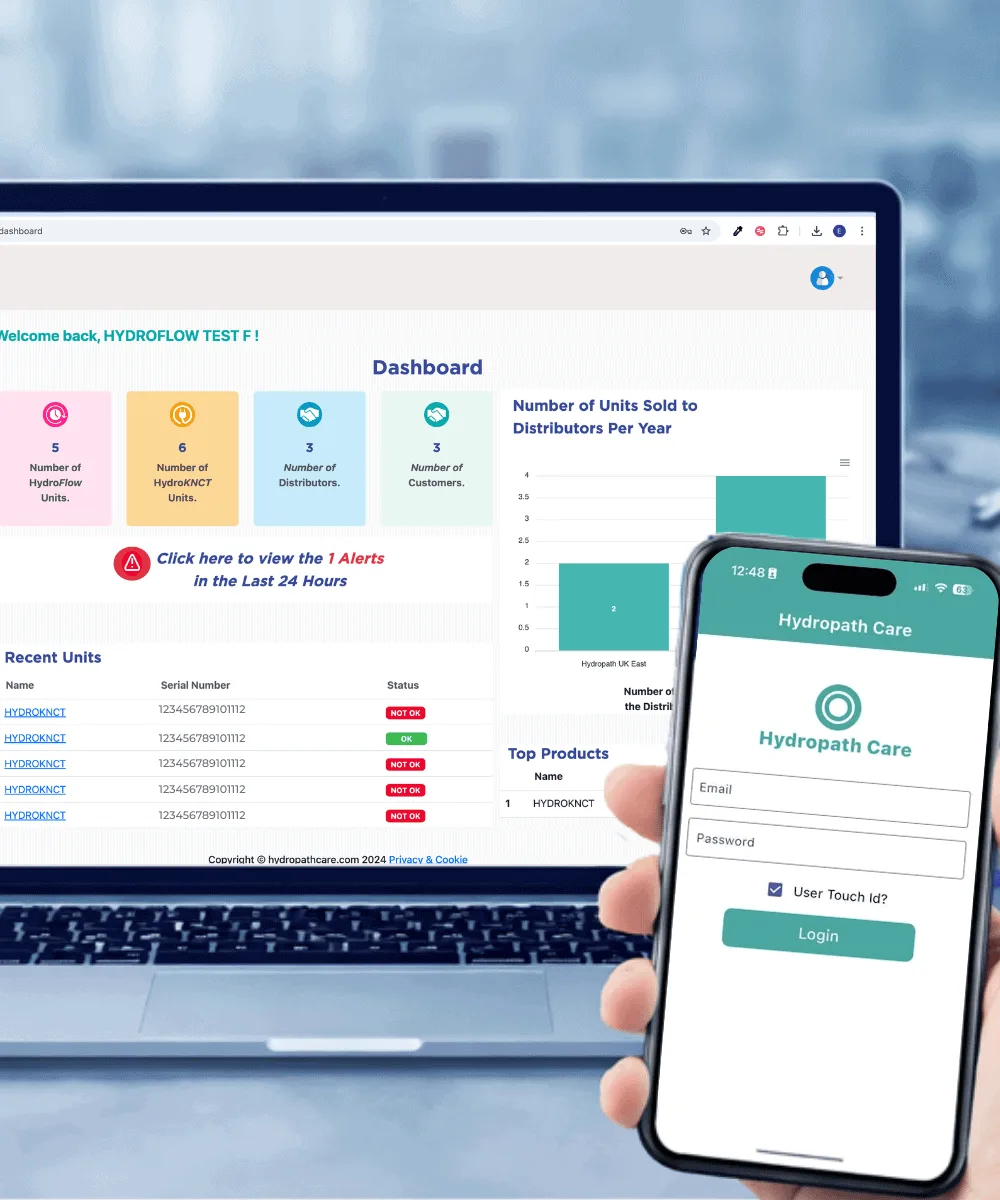
Hydropath Care dashboard

One device. One platform. Full transparency.

HydroKNCT and Hydropath Care are designed to work together as a single connected monitoring solution for every HydroFLOW installation across your network.

↑

Real-time signal performance data from every unit

↑

24/7 temperature and power monitoring

↑

Instant alerts when readings change

↑

Central dashboard for all sites

↑

Full logging and trend transparency

FAQ

Your questions answered

How much water can be saved in a cooling tower?
The saving depends on the cycles of concentration the tower runs at today and those that can be reached with HydroFLOW. Blow-down volume can fall by up to 85%, as in the case study of a Fortune 100 company headquarters in Houston. Since most of the water in a tower evaporates, the saving in make-up water is lower than the percentage saved in blow-down. For an estimate for your tower, use the calculator above.
Does installation require shutting down the tower?
No. The unit is installed externally on the existing pipework, with no cutting, welding or shutdown. The tower keeps operating throughout the entire installation.
Does the system reduce the risk of charges for out-of-spec discharge?
HydroFLOW makes it possible to reduce the dosing of chemicals and biocides, so fewer residues reach the blow-down water and the risk of exceeding limits and incurring charges for out-of-spec discharge falls (industrial effluent rules). When cycles of concentration are raised, the blow-down water is more concentrated in salts, so it is advisable to set the conductivity target also according to the water corporation’s threshold values.
Can electronic water treatment replace cooling tower chemicals?
HydroFLOW can significantly reduce chemical use, and the extent of the reduction depends on the type of chemical. For scale inhibitors, a reduction of about 50%–80% can typically be reached, and in some documented cases their use was stopped altogether. For biocides, the typical reduction is about 50%–75%, not full discontinuation — most cooling towers continue to benefit from some biocide dosing alongside HydroFLOW. When reducing an inhibitor package that also includes a corrosion inhibitor, it is advisable to keep monitoring corrosion. Depending on the size of the system, several units may be required — for example on the return line to the tower and on the condenser or chiller line. We recommend a site survey to determine the right installation solution.

Ready to cut your cooling tower’s costs?

Tell us about your system and our team will estimate your expected annual savings — at no cost and with no obligation.