Commercial

Agriculture & Irrigation

HydroFLOW reduces clogging in pipework, filters, spray nozzles and drip emitters, protects the irrigation system from limescale and biofilm, and reduces the need for acid flushes and chemicals — with no interruption to irrigation.

Fewer blockages in the irrigation system Protection from limescale and biofilm Fewer acid flushes
Operational challenges

What’s hurting your yield and irrigation system?

Farmers in Israel face complex water quality and high operating costs, which directly hurt yield and profitability.

01

Clogging in drip emitters and irrigation systems

Effluent and well water rich in calcium, magnesium and iron form hard limescale inside emitters and pipes.

✓ With HydroFLOWLess limescale build-up in pipework, filters and nozzles, more uniform irrigation and fewer flushes.
02

Biofilm build-up and contamination

A slime layer in irrigation pipes provides a substrate for bacteria and algae to multiply, clogging the system.

✓ With HydroFLOWReducing biofilm in pipework and filters — fewer clogs and longer intervals between flushes.
03

Low fertiliser efficiency

In hard water, fertiliser components can react with minerals and become unavailable to the plant — costly waste and poor uptake.

✓ With HydroFLOWBetter fertiliser utilisation: when the system is clean and minerals do not adhere to the walls, fertiliser reaches the plants more evenly.
04

Acid flushes and working days

Clogged emitters, nozzles and filters mean frequent flushing, acid injection and manual work, and sometimes stopping irrigation.

✓ With HydroFLOWFewer and shorter flushes — in a documented case study the well start-up flush fell from about 30 minutes to 2.
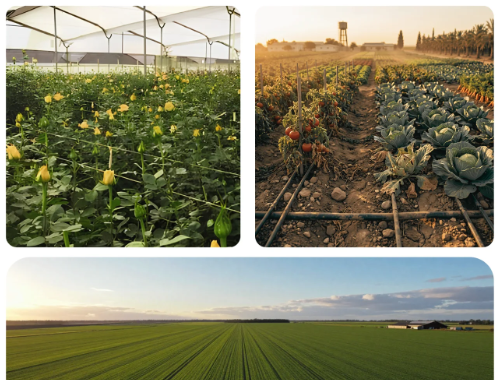
Agriculture and irrigation systems with HydroFLOW unit
Lower costs
A cleaner, more uniform irrigation system, less maintenance, fewer chemicals and a basis for a better yield.
Want proof first? See our installation results and case studies →
The solution

How does HydroFLOW improve irrigation?

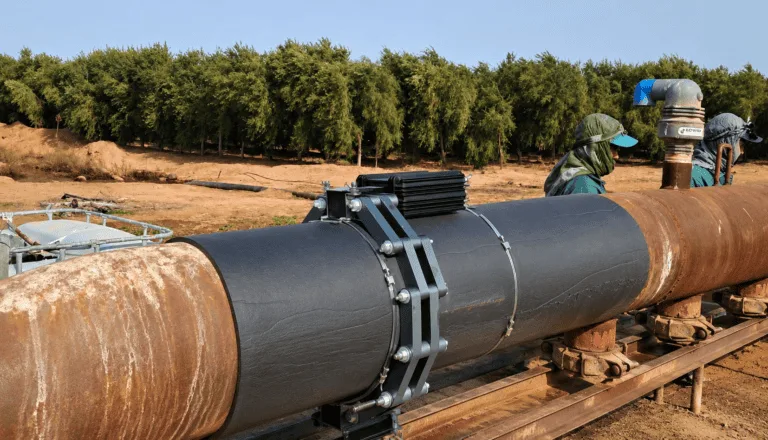
HydroFLOW is installed externally on the main pipe of the irrigation line, ahead of the filtration system, with no cutting and no interruption to irrigation. A unique electrical signal at ~150 kHz causes minerals to crystallise in the water instead of adhering to the walls, and interferes with biofilm establishing itself. HydroFLOW works on polyethylene, PVC and metal pipework.

30 → 2 min flush

Based on a documented case study: the well start-up flush fell from about 30 minutes to 2, and the interval between flushes grew from 5 to 20 days — an olive and crop farm of 60,000 hectares, Al Jouf, Saudi Arabia.

Read the case study ←
Case study
Scale → powder

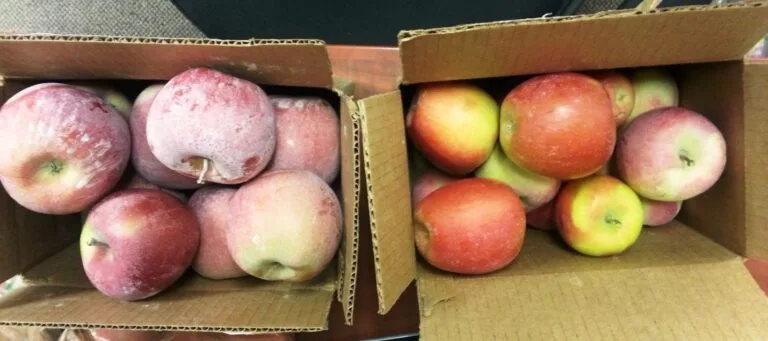
Based on a documented case study: the limescale that formed on apples from the spray water turned into a fine powder that rinses off easily, the irrigation reservoir cleared within two weeks, and the snails that had been clogging the filters disappeared — a single 12-inch HydroFLOW Custom unit, apple orchard, Yakima Valley, Washington, USA.

Read the case study ←
Case study
18.5% longer stems

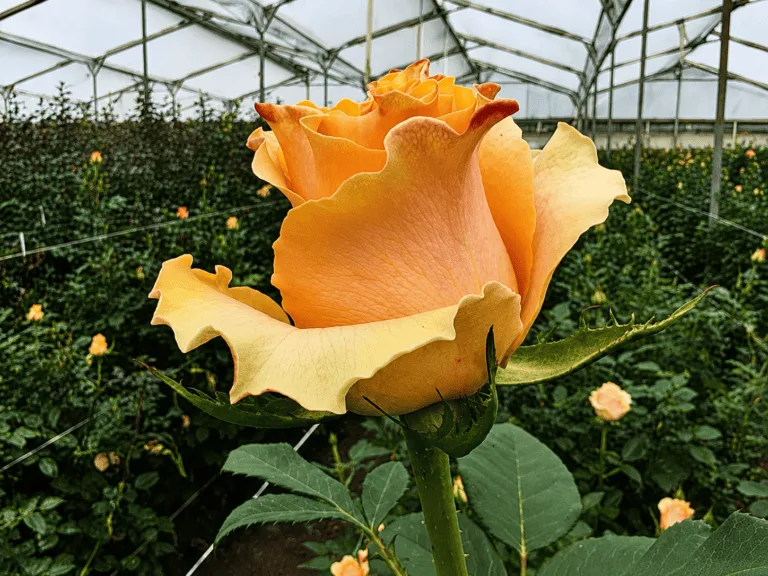
Based on a documented case study: the average stem length rose from 42.3 to 50.1 cm, and monthly production rose from 8,202 to 14,170 roses in the cold season — a rose greenhouse, South America.

Read the case study ←
Case study
No spray-nozzle clogging

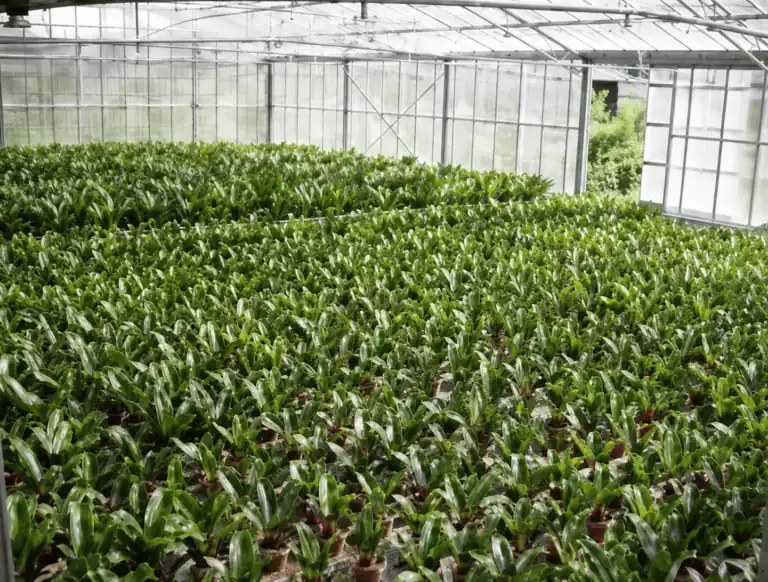
Based on a documented case study: at a nursery on well water of about 350 ppm hardness, no further nozzle clogging was reported after several months, and the taps stopped dripping — a single HydroFLOW unit, Liguria, Italy.

Read the case study ←
Case study
Installation process

Three steps to an advanced solution.

01

Installation

The HydroFLOW system is installed externally onto the irrigation pipework, with no cutting or irrigation-system shutdown.

02

Treatment

An electrical signal is induced into the water continuously and spreads along the pipework in both directions from the unit, treating limescale and biofilm.

03

Result

Cleaner pipework, filters and nozzles and fewer flushes — typically within weeks to months. The effect on yield is measured over a growing cycle.

What’s really stopping yield in Israel

From a blocked emitter to the root — three links in the same chain

Emitter clogging, biofilm in reclaimed water and irrigation uniformity are not three separate problems — they are three points on the same chain that starts at the system head and ends at the plant’s root.

1Emitters and spray nozzles — the narrowest opening clogs first

With every evaporation cycle, dissolved minerals stay concentrated exactly at the narrowest opening they passed through — which is why emitters and spray nozzles are always the first component to clog in a system, even while the main pipework is still completely clean.

That is why the type of emitter matters. HydroFLOW gives its best results in systems where the line stays full of water between irrigations: pressure-compensating emitters with a membrane and anti-drain mechanism, sprinklers and misting systems. With ordinary emitters, where the line drains and water evaporates at the outlet, the effect at the emitter itself is more limited, and most of the benefit is at the system head, in the filters and in the pipework.

2Biofilm and MIC — the dominant challenge in reclaimed water

A significant share of irrigation in Israel relies on reclaimed effluent, where biofilm is usually the more dominant challenge than classic limescale — including microbially induced corrosion (MIC) in the pipework itself.

5 → 20 days
Flush interval at a drip-irrigated orchard in an arid region — biofilm and MIC dropped along with clogging.
Case study →
26% → 89%
Share of stems that reached 50 cm in length — a rose greenhouse, South America.
Case study →

3Irrigation uniformity — every plant gets what was planned for it

When pipework, filters and outlets are clean, water and fertiliser are distributed more evenly across the field, and every plant receives the dose that was planned for it. The benefit is in the uniformity of distribution and the quality of irrigation.

Not every treatment is reduced to the same degree

Acid flushes

Fewer flushes, shorter flushes

Once limescale and biofilm are treated, the intervals between acid flushes can typically be extended and the flushes shortened. In the Saudi Arabia case study the flush interval grew from 5 to 20 days.

Chlorine and reservoir disinfection

A reduction, not full elimination

In reclaimed water and open reservoirs most systems continue to benefit from some disinfection dosing alongside HydroFLOW — not as a full replacement, but as a reduction in the amount required.

Comparison

HydroFLOW versus the usual solutions

HydroFLOWSalt-based softenerAcid / antiscalant injectionManual acid flush
How it worksAn electrical signal through the pipe wallSwaps calcium and magnesium for sodiumChanges the water chemistry at a continuous doseCleaning after the blockage has already formed
What goes into the waterNothingSodiumAcid or a chemicalAcid
Effect on the soilNoneSodium harms soil structureDepends on the substance and doseDepends on the substance
ConsumablesNoneSalt and resinConstantWith every flush
Irrigation stoppageNoSometimes, during regenerationNoYes
Applications

Who is it for?

Fields with drip irrigation

Reducing clogging at the system head, in filters and in pipework over large areas — with particularly good results in pressure-compensating emitters.

Case study: an olive and crop farm in Al Jouf, Saudi Arabia: 4 HydroFLOW units on two wells, and the start-up flush fell from 30 minutes to 2.

Read the case study ←

Orchards

Maintaining irrigation uniformity over long growing seasons.

Case study: an apple orchard in the Yakima Valley, Washington: limescale on the fruit turned into a powder that can be removed, and the irrigation reservoir cleared.

Read the case study ←

Greenhouses and nurseries

Reducing maintenance in spraying, misting and irrigation systems.

Case study: a rose greenhouse in South America — the average stem length rose from 42.3 to 50.1 cm.

Read the case study ←

Dairy and poultry farms

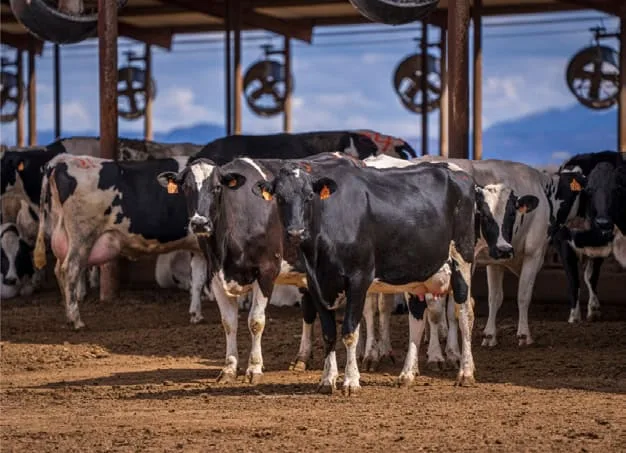
Reducing limescale in pipework, milk lines and hot-water systems.

Case study: a dairy farm in Panama — 22% less product for removing milk scale.

Read the case study ←
Management and control
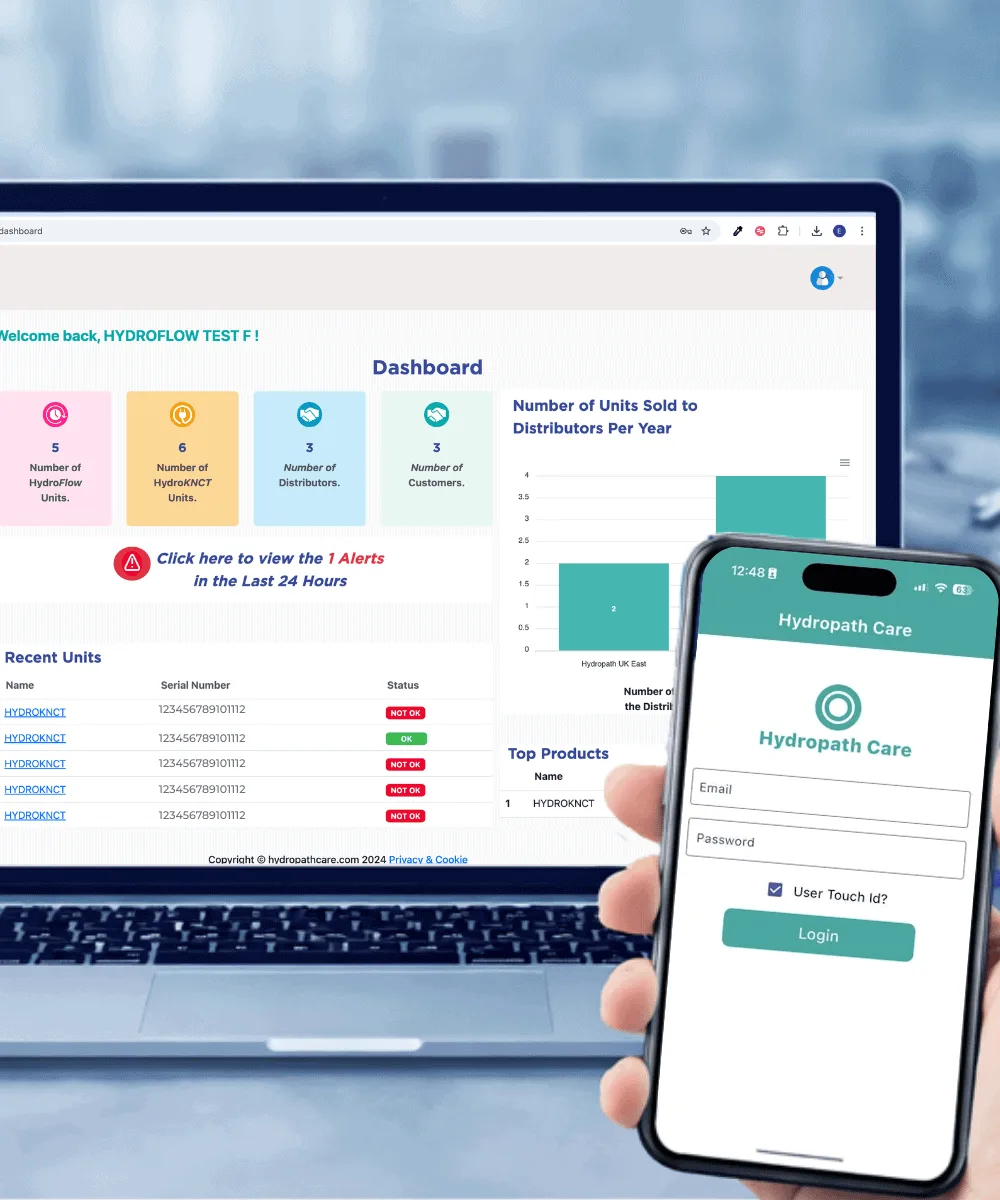
Hydropath Care dashboard

One device. One platform. Full transparency.

HydroKNCT and Hydropath Care are designed to work together as a single connected monitoring solution for every HydroFLOW installation across your network.

↑

Real-time signal performance data from every unit

↑

24/7 temperature and power monitoring

↑

Instant alerts when readings change

↑

Central dashboard for all sites

↑

Full logging and trend transparency

FAQ

Your questions answered

How does HydroFLOW reduce clogging in the irrigation system?
The electrical signal causes minerals to crystallise in the water instead of adhering to the walls of the pipework, filters and outlets, and interferes with biofilm establishing itself. The crystals travel on with the water or are caught in the filter.
Which types of emitter does HydroFLOW work best with?
HydroFLOW works best in systems where the line stays full of water between irrigations: pressure-compensating emitters with a membrane and anti-drain mechanism, sprinklers and misting systems. With ordinary emitters, where the line drains and water evaporates at the outlet, most of the benefit is at the system head, in the filters and in the pipework. We would be happy to review your system.
Does it suit treated effluent too?
Yes. HydroFLOW suits both well water and treated effluent. In effluent the main challenge is usually biofilm and not only limescale, and HydroFLOW addresses both.
Does HydroFLOW replace acid and chlorine?
HydroFLOW reduces the need for acid flushes and chemicals, and the extent of the reduction depends on the water quality and the system. In effluent and open reservoirs we recommend continuing with a tailored disinfection programme, at a lower dose.
Is ongoing maintenance required?
The unit itself requires no maintenance or consumables. You continue to maintain the irrigation system as usual, flushing lines and cleaning filters, but typically less often.
Does installation require stopping irrigation?
No. The unit is installed externally on the existing pipework, with no cutting and no interruption to irrigation.
How soon are results seen?
Improvement in the pipework and filters is typically seen within weeks to months. The effect on yield is measured over a growing cycle.

Ready to reduce the maintenance costs of your irrigation system?

Tell us about your irrigation system, water source, emitter type, filtration system and the pipe diameter at the system head, and our team will estimate your expected savings, at no cost and with no obligation.