The technology

How does HydroFLOW work?

A unique electrical signal at ~150kHz propagates throughout the entire water system — treating limescale, biofilm and bacteria simultaneously, with no chemicals and no pipe modification.

How it works

The induced signal — the difference that changes everything

The key difference between HydroFLOW and other water treatment systems lies in the induced signal: while many solutions treat water only at a single point, HydroFLOW’s signal treats water continuously throughout the whole system — from the point of entry to every point of use.

The process works by inducing a unique, harmless signal of approximately 150kHz into the entire plumbing and piping system. The pipe and the water inside it allow the signal to propagate naturally throughout the whole system — so its effect is not limited to the installation point alone.

Just as an electrical wire carries current from point A to point B, the water inside the pipe acts as a conductor, carrying the induced electrical signal throughout the entire water system — even when the water is not flowing.
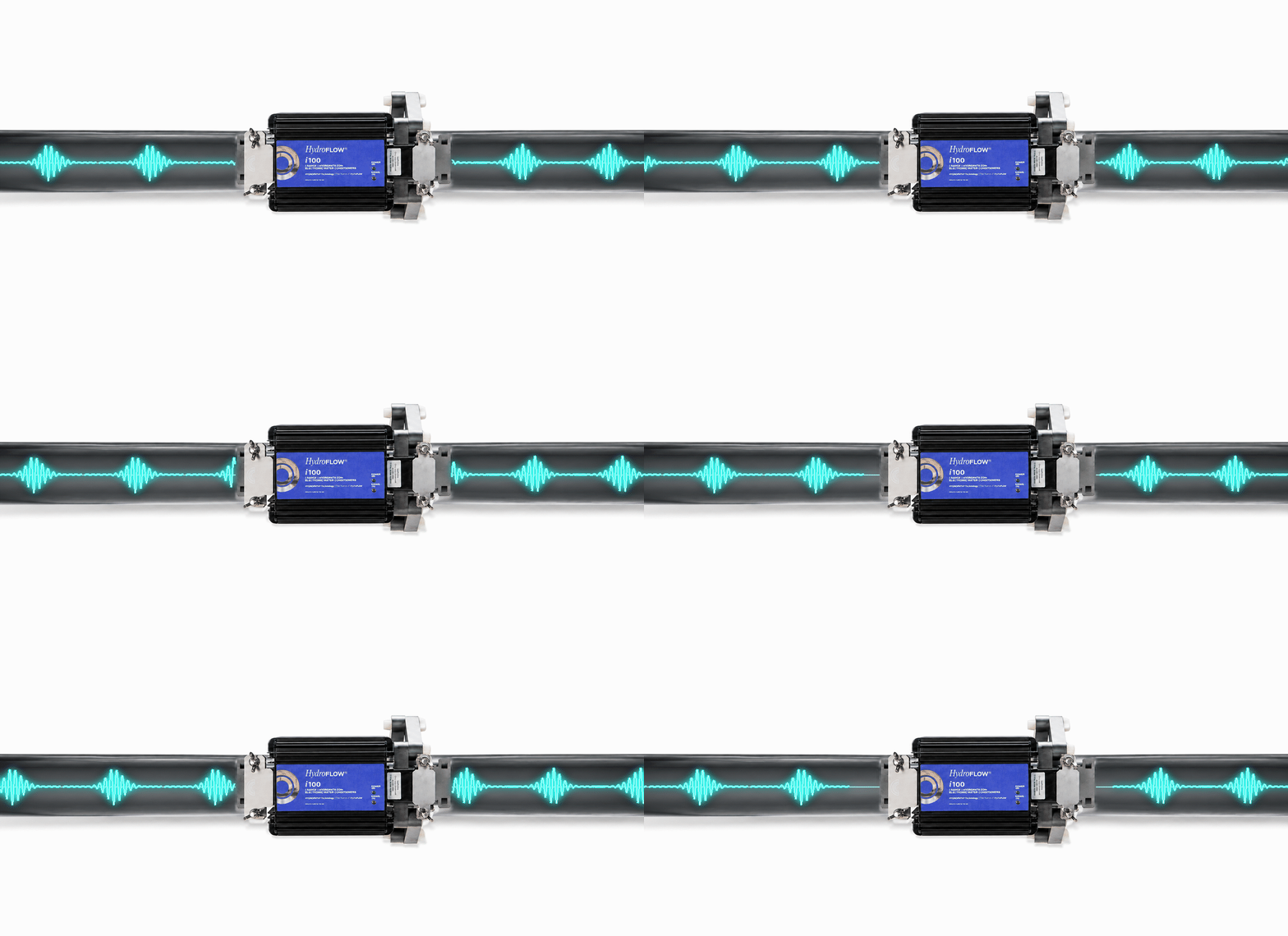
Signal frequency waveform
~150kHz Signal frequency
Electronic unit Transmits the signal
Whole system Continuous effect
24/7
Continuous operation, even when water is still
None
Chemicals, salt or consumables
Limescale

How does HydroFLOW reduce limescale accumulation?

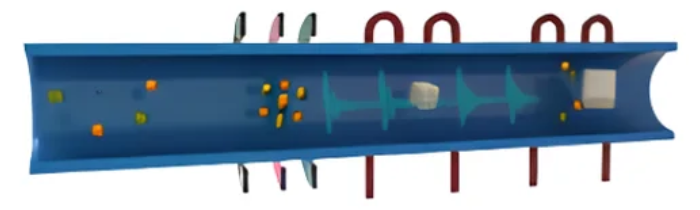
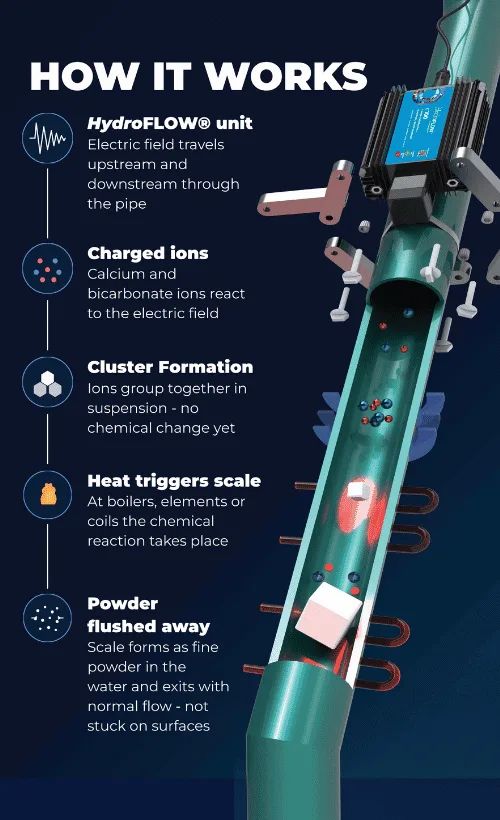
HydroFLOW systems use a unique, effective and non-invasive technology for limescale treatment. The sine waves of the induced AC signal cause ions to form nucleation sites that become stable crystals — suspended in the water rather than adhering to the piping.

Hard limescale accumulates - without HydroFLOW Without HydroFLOW

Minerals precipitate and accumulate

Minerals such as calcium and magnesium exist as dissolved solids in water. When a change in temperature or pressure occurs, they precipitate out of solution and accumulate as hard limescale on heating elements, inside pipes and on water equipment — reducing efficiency, increasing energy consumption and shortening equipment life.

Floating crystals - with HydroFLOW With HydroFLOW

Minerals become suspended crystals

In the presence of the unique signal, minerals attach to clusters (nucleation sites). As these clusters precipitate out of solution, they form suspended crystals that do not accumulate as hard limescale. With no new limescale forming, flowing water gradually begins to dissolve and remove limescale that has already built up.

Applications: Plumbing systems, water heaters, boilers, cooling towers, heat exchangers, wells and pumps — in residential, commercial, industrial and agricultural settings.

Not All Limescale Is the Same

Calcium carbonate (classic limescale) is the most common, but industrial water, cooling towers and desalination plants also see other mineral deposits — some of which don’t even dissolve in acid. The same physical principle behind HydroFLOW — forming suspended crystals at the nucleation stage — is relevant to most of these deposit types.

CaCO₃

Calcium Carbonate (Limescale)

The most common type of scale — forms when calcium and magnesium precipitate from solution due to heating, pressure change or water concentration. Dissolves in acid.

CaSO₄

Gypsum (Calcium Sulphate)

A hard, rough needle-shaped deposit that forms in water rich in calcium and sulphate. Unlike limescale — it does not dissolve in acid, so traditional chemical removal methods are ineffective against it.

BaSO₄ / SrSO₄

Barium & Strontium Sulphate

Sulphate deposits with especially low solubility, common in industrial water with high total dissolved solids (TDS).

Fe

Iron & Mixed Deposits

Iron oxides and mixed mineral deposits, which usually combine with classic limescale, blocking flow and complicating cleaning.

SiO₂

Silica

A hard, glassy deposit, among the most resistant to removal — common in membranes and cooling systems with a high recovery rate.

MgNH₄PO₄

Struvite

A phosphate deposit common mainly in wastewater treatment — anaerobic digestion, centrate lines and sludge presses.

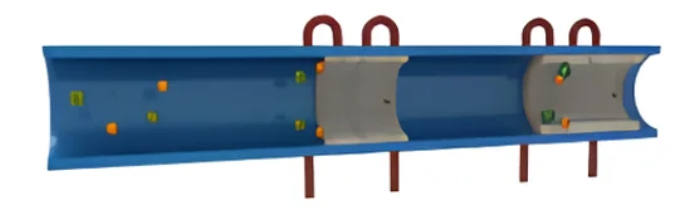
How HydroFLOW works — unit installed on pipework, ions charge and form clusters

Why it matters: not every deposit responds to the same treatment

The critical difference: limescale dissolves in acid — gypsum doesn’t. This means conventional acid removal, which works well on classic limescale, simply isn’t effective on gypsum — requiring mechanical cleaning and system shutdown. HydroFLOW’s operating principle works on the nucleation stage shared by most of these deposit types, so the same single system helps against both classic limescale and deposits that don’t respond to traditional chemical treatment.

Bacteria and biofilm

Bacteria reduction and treatment — up to 99%

Bacteria reduction and treatment
in two independent validation tests
SGS International Bacteria reduction in drinking water
ALS Laboratories Legionella treatment and prevention

HydroFLOW technology has been tested at leading global testing institutes to validate the unique signal’s effect in treating and reducing contamination and bacteria across various water systems. Both tests showed bacteria reduction and treatment of up to 99%.

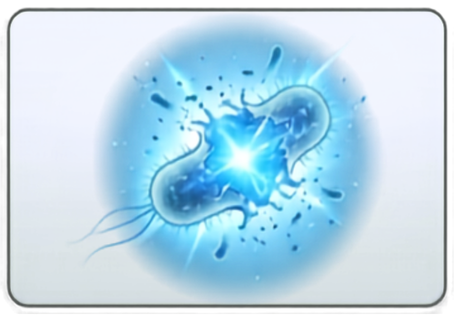
The treatment mechanism rests on a simple physical principle: a bacterial cell passing through the HydroFLOW ferrite ring becomes electrically charged by the signal. As a result, a layer of pure water forms around the cell, creating osmotic pressure on it, and the process of equalising concentrations causes the cell to swell with water until it collapses.

At the same time, the electrical signal also disrupts the cell membrane itself, contributing to its breakdown. As a result, the signal’s presence along the piping creates a continuous disruption to the bacterial layer adhering to the inner surface of the pipe, gradually causing it to be released.

01
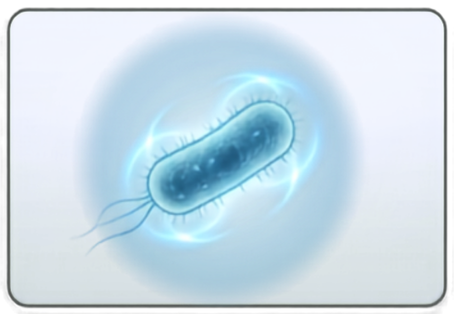
Step 1 — electrical charging
Electrical charging

A bacterial cell passing through the HydroFLOW ferrite ring becomes electrically charged by the signal.

02
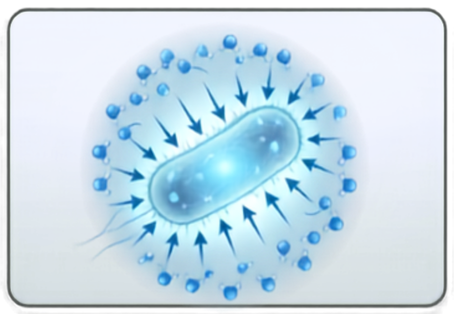
Step 2 — pure water layer
Pure water layer

Water molecules attach to the cell membrane and form a layer of pure water around the bacterial cell.

03
Step 3 — osmosis
Osmosis

A process of osmosis — equalising concentrations — draws water into the cell.

04
Step 4 — cell collapse
Cell collapse

The osmotic pressure building inside the cell causes it to swell and collapse, releasing the bacterium into the water flow.

Biofilm & Biofouling — What They Are and Why They Matter

Two related but distinct terms: biofilm is the bacterial layer itself that adheres to a surface; biofouling is the broader phenomenon of biological build-up — bacteria, algae, and in marine systems larger organisms too — on wet surfaces, harming system performance.

What is biofilm

A protective layer for bacteria

Biofilm is a sticky layer of bacteria and microorganisms that adheres to pipe walls, heat exchangers and other wet surfaces. The layer protects the bacteria hidden within it from heat and disinfectants, making it harder for standard chemical treatments to penetrate.

What is biofouling

Broader biological build-up on surfaces

Biofouling includes bacterial biofilm, but also algae, and in marine systems mollusks and crustaceans that settle on ship hulls, sea-water cooling systems and submerged infrastructure. In these industries, biofouling is estimated to cause billions of dollars a year in maintenance costs, equipment failure and reduced efficiency worldwide.

How HydroFLOW helps

Continuous disruption of bacterial attachment

The signal’s presence throughout the pipework creates ongoing disruption to the layer of bacteria attached to the pipe’s inner wall, gradually contributing to its release — including in slow-flow or stagnant areas, where chemical treatments and mechanical flow struggle to penetrate.

Result

Reduced biofouling and improved system efficiency

As the underlying biofilm layer weakens, the broader build-up of biofouling — including algae and biological deposits — is also reduced, improving heat-transfer efficiency, water flow and the performance of filtration and disinfection systems.

Improved filtration

Flocculation — fewer backwashes, greater savings

×3
Possible reduction in backwash frequency
vs traditional filtration
50%
Reduction in water used per backwash cycle
Direct saving in water consumption
Maintenance costs, downtime and chemical use
Direct result of higher filtration efficiency

HydroFLOW systems improve filtration efficiency by creating larger flakes, through a process known as flocculation. Larger flakes are easier for the filter to capture — so the sand filter remains effective for longer between backwashes.

This process significantly improves filtration efficiency and can reduce backwash frequency by a factor of up to three, while the amount of water used in each backwash cycle is reduced by up to 50% — meaning direct savings in costs, water consumption, and maintenance downtime.

Flocculation in Swimming Pools

In swimming pools — public, hotel and private — flocculation plays a unique role: it doesn’t just save water and maintenance, it directly affects water clarity, the amount of chlorine required and bather comfort.

Physical flocculation instead of chemical

Many pools use a chemical flocculant (coagulant) to make fine particles clump together. HydroFLOW achieves a similar effect using the electrical signal alone — with no need for additional chemical dosing, as an addition to the existing filtration process, not a replacement for routine disinfection.

Helping filter out Cryptosporidium

Better flocculation is recognised as an important part of removing chlorine-resistant contaminants such as Cryptosporidium, which must be physically filtered out and cannot be eliminated by chemicals alone.

Cloudy and green water

Cloudy water is usually caused by fine particles the filter misses; green water is an algae bloom. Improved filtration alongside disruption to the biofilm algae rely on helps address both conditions.

Reduced chlorine demand

Better filtration and a weakened biofilm reduce the amount of chlorine, acid and flocculant actually required — less sharp chlorine odour and irritation for bathers, while maintaining an appropriate disinfection level per regulations.

See all swimming pool case studies →
Corrosion

Reducing corrosion damage

65%
Possible reduction in the rate
of pipe corrosion development

HydroFLOW’s operation creates protection against pipe corrosion. The electrical signal in contact with the pipe disrupts the electrochemical reaction required for corrosion to form.

HydroFLOW systems can reduce corrosion by up to 65% — providing additional protection for the pipe infrastructure, alongside the treatment of limescale, biofilm and bacteria.

When Bacteria Accelerate Corrosion

Not all corrosion comes from a “regular” electrochemical reaction. A significant portion of industrial corrosion damage is caused by bacteria colonising the metal surface itself — a phenomenon called Microbiologically Influenced Corrosion (MIC).

How it works

Certain bacteria — chief among them sulfate-reducing bacteria (SRB) — colonise the biofilm layer attached to the metal surface, mainly in areas of slow flow, stagnant water or dead legs in the pipework. Through their metabolism, they consume oxygen and produce corrosion-causing by-products (such as sulphur compounds), creating a localised electrochemical cell directly on the metal surface. The result: especially severe, localised corrosion (pitting) that progresses far beyond the “normal” corrosion rate.

Why it’s especially dangerous

Unlike uniform corrosion, which can be anticipated and scheduled for maintenance, MIC damage is concentrated at specific points and is usually invisible until failure — a leak, a hole in the pipe, or damage to a heat exchanger. The highest-risk areas are exactly the places hardest to treat with traditional means: slow flow, stagnant water, and pipe sections far from the chemical dosing point.

What the research says: The professional literature sometimes reports reductions of up to about 50% in MIC damage rates under certain conditions — the figures vary widely between studies and depend on the bacteria type, flow conditions and pipe material. We recommend treating this as a general range from the literature, not a specific performance guarantee.
Source: FHWA report and academic reviews on MIC

How HydroFLOW is relevant to MIC

  • The signal propagates through the water’s own conductivity and acts throughout the pipework — including exactly the slow-flow and stagnant-water areas where MIC develops at the highest risk
  • Continuous disruption to biofilm attachment on the metal surface reduces the habitat in which bacteria such as SRB establish themselves
  • 24/7 operation independent of flow — so protection continues even when the system is not active
  • Complements, and does not replace, professional corrosion monitoring in high-risk systems
FAQ

Questions about the technology

Is the signal harmful to people, pets or the water?
No. The ~150kHz signal is unique and harmless. It does not alter the chemical composition of the water, adds no chemicals of any kind, and does not affect the natural minerals which remain in the water and are important for health.
What is the difference between HydroFLOW and magnetic water conditioners?
Simple magnets produce a static field at a single point only, and their effect diminishes rapidly past that point. HydroFLOW uses a dynamic AC signal at ~150kHz that propagates throughout the whole water system (even when water is still) and provides continuous, lasting treatment across all the piping.
Does the technology work on all pipe types?
Yes. The signal propagates through any pipe type — iron, copper, plastic (PEX, PVC, PE), stainless steel and more. The ferrite ring clips externally onto the pipe with no cutting, welding or infrastructure change.
How long does it take to see results?
Initial improvements in filtration and water clarity are usually noticeable within days to weeks. Reduction in backwash frequency is felt within 4–8 weeks. Breaking down limescale accumulated over years is a gradual process that can take several months.

Want to see the technology in action?

The HydroFLOW Israel team will carry out a comprehensive engineering analysis and precise ROI assessment for you — at no cost and with no obligation.