Industry
HydroFLOW dramatically reduces limescale build-up on RO membranes, cuts the need for chemicals and significantly extends the life of equipment and filters.
Desalination plants operate under constant pressure to deliver high-quality, continuous water, while facing complex technical and economic challenges.
During reverse osmosis, calcium and magnesium ions build up on the membrane surface and impair filtration efficiency.
Preventing limescale with traditional methods requires a constant, costly injection of anti-scalant chemicals.
Biofilm clogging the membrane reduces flow rates and shortens equipment life.
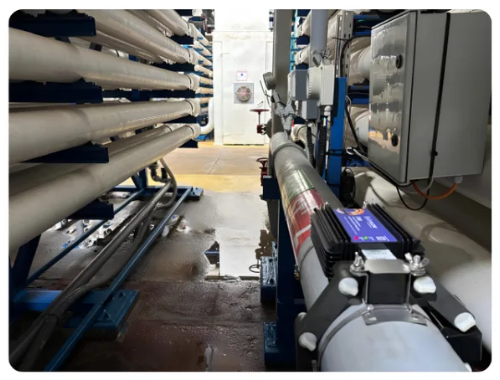
HydroFLOW generates an electrical signal induced into the pipework via an external ferrite ring, with no direct contact with the water. The signal affects calcium, magnesium and bicarbonate ions, encouraging the formation of less-sticky aragonite crystals instead of hard calcite.
Studies reported reductions in biofilm density on treated surfaces.
The Langelier Saturation Index (LSI) at the membrane surface stays lower, enabling higher recovery rates.
Reduced use of chemical agents for limescale prevention.
External installation with no pipe cutting and no plant shutdown.
The HydroFLOW system is installed externally onto the desalination plant’s pipework, with no cutting or plant shutdown.
The signal creates an alternating electrical field within the fluid, affecting calcium, magnesium and bicarbonate ions.
Less limescale and biofilm on the membrane, higher recovery rates and a longer equipment lifespan.
“The system eliminates the need for anti-scalant and biocide at the desalination plant.”
“The system helps optimise and reduce the chemical dosing required, as an addition to the existing treatment scheme.”
Israel’s major desalination plants (Sorek, Hadera, Ashkelon, Ashdod) are all seawater facilities. In warm seawater rich in organic matter, biofilm builds up on intake surfaces and membranes faster than classic limescale — and that’s usually the real reason behind declining recovery rates and more frequent cleanings.
Marine bacteria and microorganisms attach to intake surfaces and RO membranes, building a protective layer (biofilm) around themselves that resists disinfectant penetration. The layer gradually blocks water flow, raises the pressure required and accelerates the need for chemical cleaning.
The continuous electrical signal operates along the entire water line — including the seawater intake line, before the pretreatment stage — and continuously disrupts bacterial attachment to surfaces, 24/7. The result: less biofilm reaches the membrane stage at all.
A desalination plant in Chile kept its seawater intake line completely free of mussels for 223 days using a HydroFLOW Custom i20″ unit, with no cleaning and no chemicals — while a parallel, untreated control line accumulated over 3cm of mussel coverage.
The exact same scenario: a warm seawater intake line, high risk of marine biofouling, and a plant that keeps running continuously with no shutdown for cleaning. Israel’s desalination plants share the same starting conditions as the plant in Chile — making this result a more meaningful indicator than most other case studies on the site.
Protecting large-scale RO membranes.
Improving the efficiency of pre-treatment stages before water enters the RO system.
Extending membrane life and reducing the frequency of cleaning and replacement.
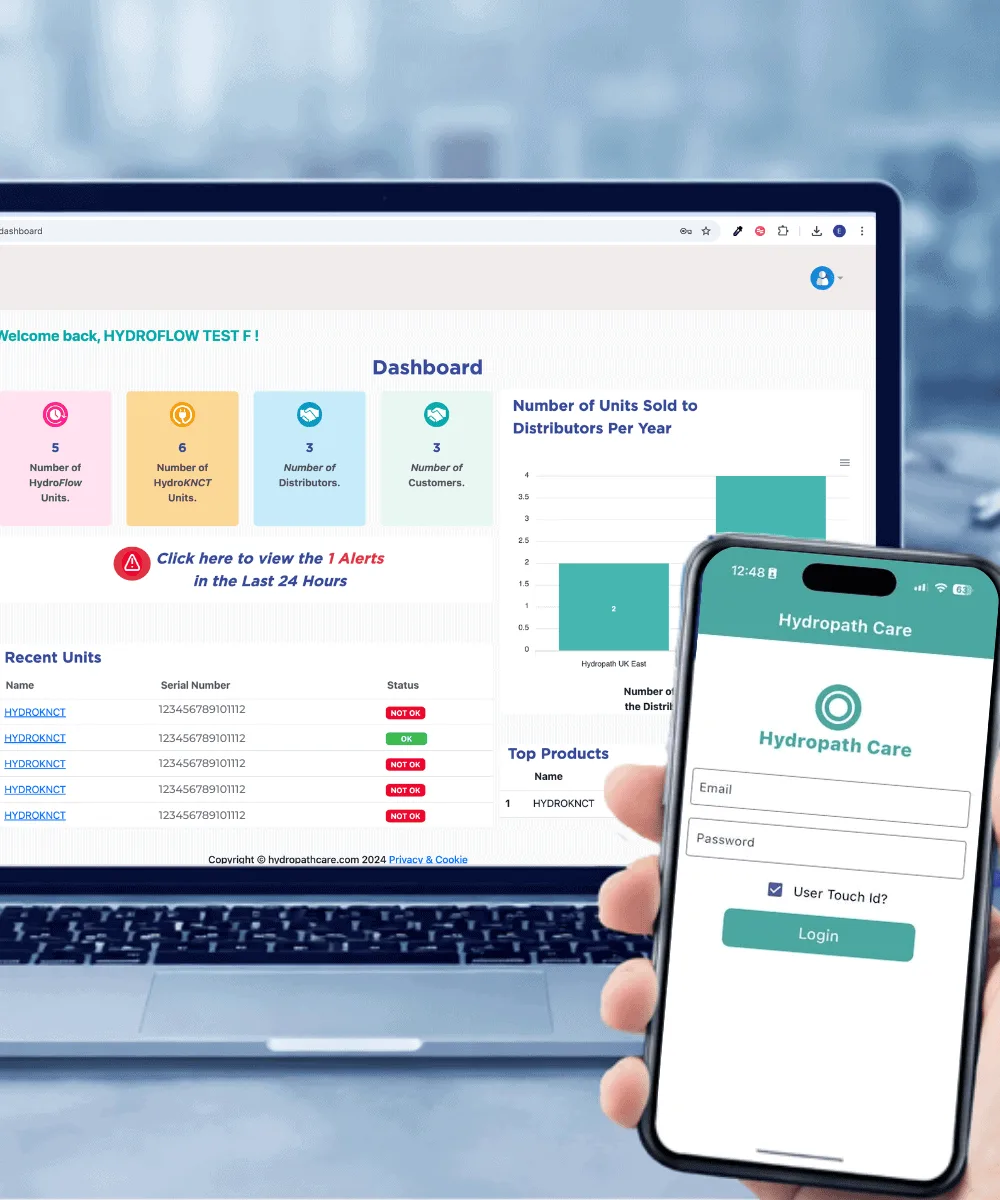
HydroKNCT and Hydropath Care are designed to work together as a single connected monitoring solution for every HydroFLOW installation across your network.
Real-time signal performance data from every unit
24/7 temperature and power monitoring
Instant alerts when readings change
Central dashboard for all sites
Full logging and trend transparency
Tell us about your RO plant and our team will estimate your expected savings — at no cost and with no obligation.