Industry
HydroFLOW protects heat exchangers and central heating systems from limescale, biofilm and corrosion — installed externally on existing pipework, no cutting, no shutdown.
Israel’s water is rich in calcium and magnesium. When this water is heated in a plate exchanger or inside a pipe, limescale settles at a high rate and creates three challenges.
Just 2mm of limescale causes about a 20% loss in thermal efficiency. The boiler is forced to burn more gas, diesel or electricity for the same heat output.
Heat exchangers are fertile ground for biofilm, which blocks flow, accelerates corrosion and can host Legionella bacteria.
Electrochemical reactions in the presence of limescale and biofilm accelerate corrosion, shortening equipment life and requiring shutdowns for cleaning and part replacement.
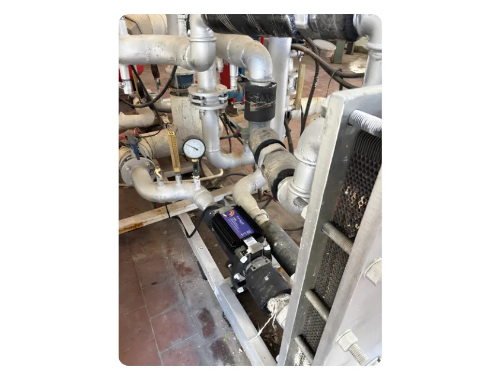
The system is installed fully externally on the heat exchanger’s water feed line — no pipe cutting, no shutdown of the heating system. An electrical signal at ~150kHz causes dissolved minerals to crystallise into clusters suspended in the water and flushed away with the flow, instead of settling as hard limescale on the exchanger’s plates and walls.
Plates and pipes stay largely free of limescale, ensuring optimal heat transfer.
Disrupting the electrochemical reaction extends the life of exchanger plates and pipes.
Continuous disruption of the bacterial biofilm layer, with no biocides.
One-time, fully external installation, with no pipe cutting or modification.
The two most common heat-exchanger types in Israeli industry and commercial buildings are exposed to limescale and biofilm somewhat differently — but HydroFLOW treats both on the same underlying principle.
Common in central heating systems, apartment buildings and commercial facilities. The tightly stacked plates create narrow channels — even a thin limescale layer significantly harms flow and thermal efficiency.
Common in heavy industry and power plants. Less prone to complete blockage, but a limescale layer along the entire length of the internal tubes harms heat transfer over a large surface area.
Heat exchangers are a core component in almost every industrial or commercial system — here’s how HydroFLOW protects them in other contexts.
Heat exchangers and condensers in the cooling tower itself — combined protection alongside higher cycles of concentration.
Heavily loaded steam condensers and heat exchangers — maintaining optimal turbine vacuum.
Heat exchangers for hot water and HVAC — energy efficiency and guest comfort.
Critical reliability of heating and HVAC systems, alongside Legionella risk management.
Heat exchangers in production and pasteurisation processes — meeting hygiene standards.
Heat exchangers in digestion and heat-recovery systems — energy efficiency in the treatment process.
The HydroFLOW system is installed externally onto the heat-exchanger pipework, with no cutting or system shutdown.
An electrical signal is induced along the entire water system — continuously, 24 hours a day.
Existing limescale gradually breaks down; cycles of concentration can be raised and blow-down cut within weeks.
Office buildings, shopping centres and hotels — for electricity savings and continuous service.
Reducing the need for line shutdowns for chemical cleaning and extending equipment life.
Protecting equipment and saving on heating costs for all residents.
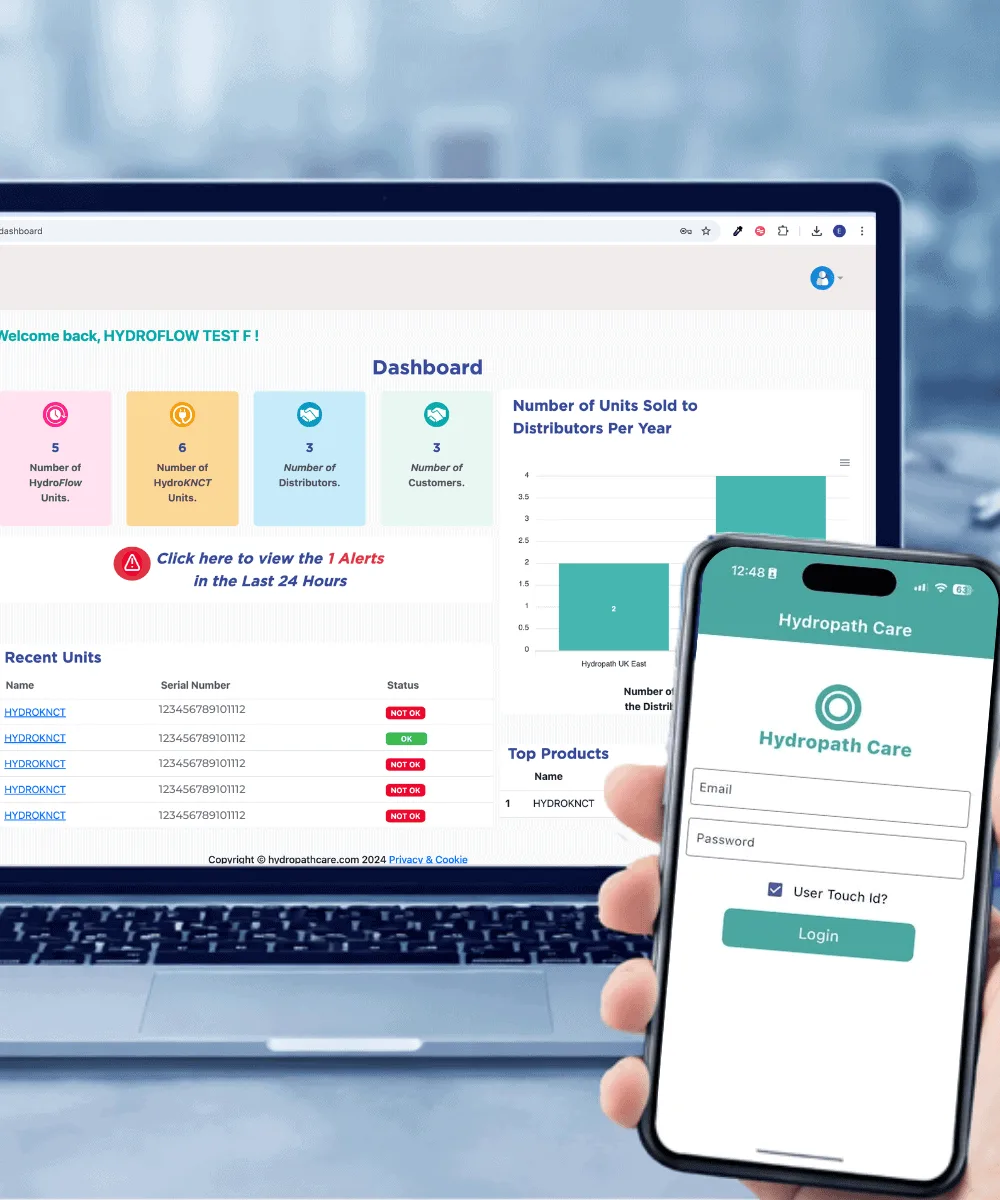
HydroKNCT and Hydropath Care are designed to work together as a single connected monitoring solution for every HydroFLOW installation across your network.
Real-time signal performance data from every unit
24/7 temperature and power monitoring
Instant alerts when readings change
Central dashboard for all sites
Full logging and trend transparency
Tell us about your heating system and our team will estimate your expected annual savings — at no cost and with no obligation.