Industry
HydroFLOW protects the condensers, heat exchangers, cooling towers and seawater lines at the power plant from limescale and biofilm, helps maintain turbine vacuum, and reduces chemical, water and maintenance costs, in once-through cooling and cooling towers alike. With no plant shutdown.
Power plants depend on the efficiency of their cooling systems and heat exchangers. In Israel, cooling systems face four key challenges.
In cooling systems using seawater or brackish water, microbiologically induced corrosion (MIC) forms corrosion tubercles in intake piping, strainers and heat exchangers. The process accelerates equipment wear, increases dependence on anti-corrosion chemicals and leads to frequent system openings for cleaning and inspection.
A layer of limescale on condensers damages turbine vacuum and forces the plant to burn more fuel for the same MW output. A layer of just 1 mm reduces heat-transfer efficiency by about 7%.
Water and sewage tariffs for businesses, offices and industry stand at roughly NIS 11.9–13.2 per cubic metre before VAT, depending on consumption volume, and every cubic metre of blow-down also raises wastewater costs and the risk of charges for out-of-spec discharge.
Beyond limescale, cooling systems suffer from biofilm and algae, and with seawater cooling also from mussels and barnacles. Chemical treatment requires large budgets, storage and transport of hazardous materials, and frequent openings for cleaning.
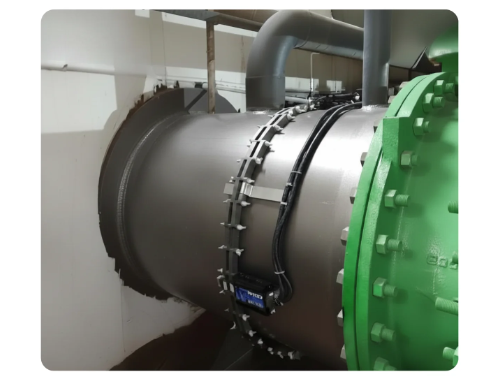
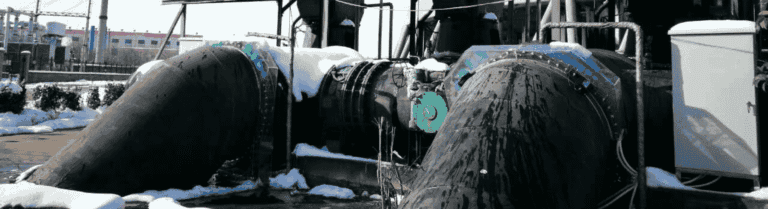
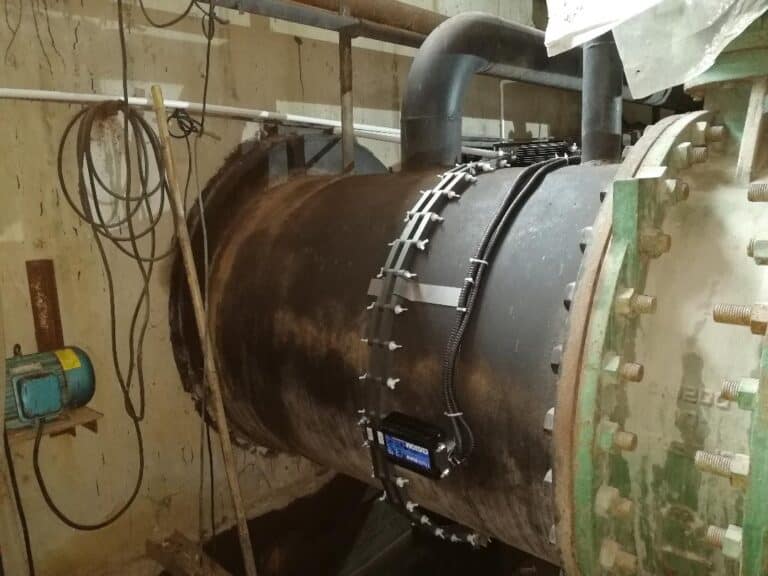
HydroFLOW is installed externally on the cooling-water pipework, with no cutting and no plant shutdown. A unique electrical signal at ~150 kHz causes minerals to crystallise in the water instead of adhering to the condenser tubes and the cooling-tower fill, and interferes with biofilm establishing itself. The signal spreads in both directions from the unit, so a small number of correctly sized installation points treats the cooling circuit.
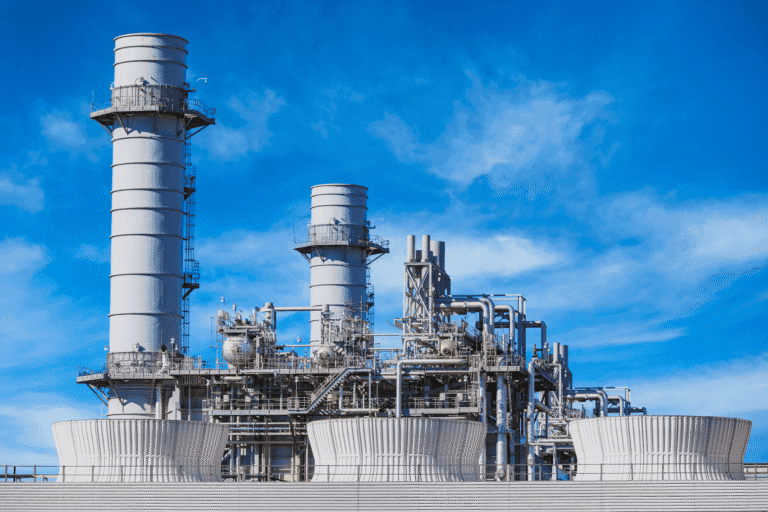
Based on a documented case study: anti-scalant and biocide dosing was stopped a week after installation, a check after 3 months found no hard scale on the condenser, and vacuum rose by 1 kPa. Two HydroFLOW Multihead units on 1,800 mm condenser lines, a power plant with two 600 MW units, China.
Read the case study ←
Case study
Based on a documented case study: 60% less blow-down, 75.5% less scale and corrosion inhibitor, and a saving of about 757,000 m³ of water a year, while maintaining condenser vacuum. A 10-cell cooling tower, a 700 MW power plant in the Great Lakes region, USA.
Read the case study ←
Case study
Based on a documented case study: the bacteria count in the cooling water fell from 300,000 to 9,000 CFU, and after 3 months no biofilm was observed on the condenser. A 180 MW LNG power plant with river-water cooling, China.
Read the case study ←
Case study
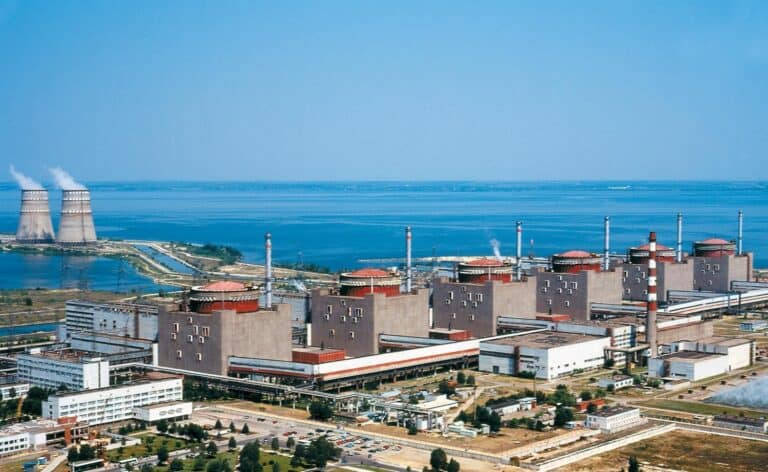
Based on a documented case study: calcite deposits up to 12 mm thick in the distillate coolers became brittle and removable, the biofouling was removed, and no new hard deposits formed during the trial. A nuclear power plant, Ukraine.
Read the case study ←
Case study
Seawater or river water is drawn in, passes through the condenser tubes once and returns to the source. There is no fixed water inventory in which to dose chemicals, so chemical treatment is limited and expensive. The main challenges: biofilm, mussels and barnacles, and microbially induced corrosion.
The same water circulates again and again, with make-up water and blow-down. The main challenges: limescale on the condenser and tower fill, water consumption, blow-down and chemicals.
HydroFLOW treats the water as it passes the installation point and does not depend on a chemical residual in the water, so it suits both types of cooling.
The more successfully limescale is treated, the more cycles the water can stay in the cooling tower before it has to be drained (blow-down). This means less make-up water is needed and less water is discharged to sewage. At power plants, where the cooling tower is the largest consumer of water on site, this is the biggest water saving.
For example: at a 700 MW power plant in the USA, after installing HydroFLOW the plant ran at higher conductivity with no additional scale. Blow-down fell by 60%, and the saving reached about 757,000 m³ of water a year, while maintaining condenser vacuum.
Calculate your water-saving potential with our calculator →
Cooling towers are considered one of the leading types of equipment at risk of Legionella outbreaks, including at power plants: warm water, slow flow in certain areas, and limescale and biofilm that create a habitat protected from disinfectants. Reducing limescale and biofilm with HydroFLOW helps lower that risk, as part of an overall Legionella management programme, not as a replacement for required sanitation protocols.
Limescale and biofilm are often mentioned together, but their effect on heat transfer at the condenser differs significantly.
The thermal conductivity of limescale is about 2.6 W/m·K, and every layer of it insulates the condenser tubes.
The thermal conductivity of biofilm is about 0.6 W/m·K, about 4 times lower than that of limescale. So a thin layer of biofilm insulates the condenser more than limescale of the same thickness. In once-through seawater cooling, biofilm is usually the dominant problem.
Source: Buckman Laboratories
When limescale is treated effectively with HydroFLOW, the use of scale inhibitors can typically be reduced significantly, and in some cases even stopped. At the power plant in China dosing was stopped, and at the plant in the USA inhibitor use fell by 75.5%.
Most cooling systems still benefit from some biocide dosing alongside the physical treatment, not as a full replacement but as a significant reduction in quantity. At the plant in the USA the use of biocides and chlorine-neutralising agents fell by more than 70%.
These are separate roles, and they remain as the plant’s treatment programme requires. When reducing an inhibitor package that also includes a corrosion inhibitor, it is advisable to keep monitoring corrosion.
| Stage in the plant’s water | HydroFLOW’s role |
|---|---|
| Make-up water, RO and desalination (demin) | Partial: reduced anti-scalant dosing and membrane fouling |
| Steam circuit and boiler | Runs on demineralised water and needs no treatment |
| Condenser and cooling-water circuit | The main application: control of limescale and biofilm in the condenser tubes, the cooling-tower fill and the pipework, in once-through cooling and cooling towers |
| Blow-down and wastewater | Indirectly: higher cycles of concentration reduce the blow-down volume |
At power plants we recommend starting with a defined trial on one point in the circuit, with metrics set in advance. It is best to start from clean equipment, after a planned cleaning, so that the measurement is reliable.
What is measured: Cooling tower: conductivity and cycles of concentration, blow-down volume, chemical consumption and condenser vacuum. Once-through seawater cooling: flow and temperature difference (ΔT) across the condenser, strainer cleaning frequency and the condition of the tubes on inspection.
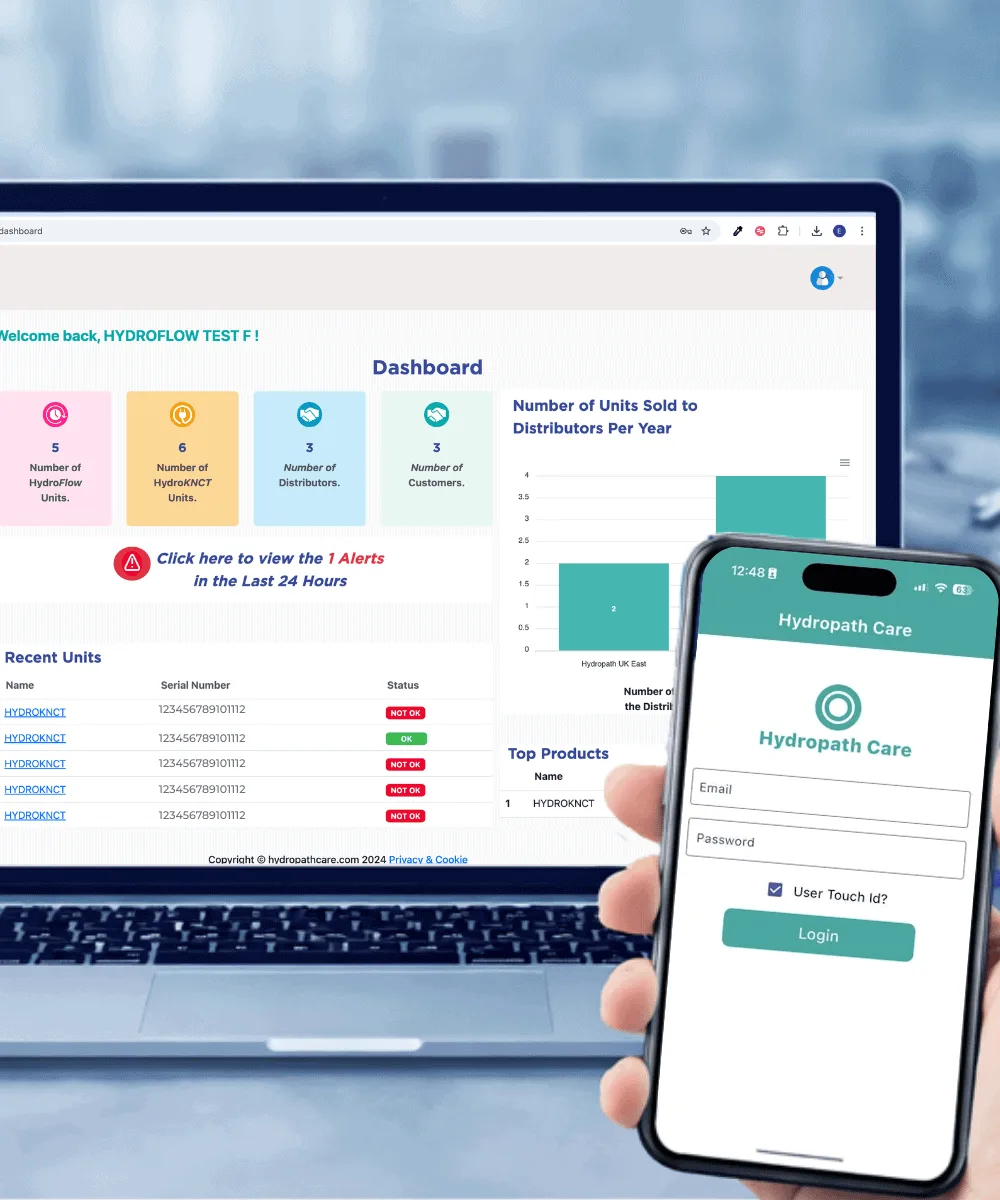
Monitoring: HydroKNCT and Hydropath Care record the units’ operation throughout the trial.
The HydroFLOW system is installed externally onto the cooling-water pipework at the power plant, with no cutting or plant shutdown.
A patented electrical signal is induced into the water continuously, 24/7, and spreads along the pipework in both directions from the unit.
Existing deposits soften gradually, new limescale formation falls, and the biofilm is disrupted. With clean condenser surfaces, vacuum, chemical consumption and blow-down all improve.
Limescale control on condensers and tower fill, running at higher cycles of concentration and with less blow-down.
Case study: 700 MW power plant, USA: 60% less blow-down and 75.5% less inhibitor.
Read the case study ←
Biofilm and limescale control on intake lines, strainers and condensers, independent of a chemical residual in the water.
Case study: LNG power plant, China: 97% fewer bacteria in the cooling water.
Read the case study ←
Reducing limescale and biofouling in coolers and heat exchangers, and improving heat transfer.
Case study: Nuclear power plant, Ukraine: LMTD rose from 47.46 to 51.08.
Read the case study ←
HydroKNCT and Hydropath Care are designed to work together as a single connected monitoring solution for every HydroFLOW installation across your network.
Real-time signal performance data from every unit
24/7 temperature and power monitoring
Instant alerts when readings change
Central dashboard for all sites
Full logging and trend transparency
Tell us about your plant: the type of cooling (once-through with seawater or river water, or a cooling tower), the cooling-water pipe diameter, and your current chemical treatment and cleaning programme. We will estimate your expected annual savings, at no cost and with no obligation.